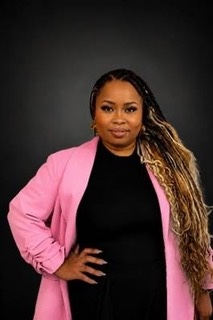
Koketso Masisi, Executive Creative Director at Retroviral, spoke to Modern Marketing about her journey into creative leadership, building inclusive teams, creating opportunities for women of colour and why women needed to be brave enough to make themselves visible.
Masisi was appointed as Retroviral’s first Executive Creative Director, a milestone that reflected her progression from a young creative finding her place in advertising to a senior leader overseeing the agency’s creative direction and a portfolio of brands.
Masisi played a key role in developing Retroviral’s creative team as the agency evolved from a social media agency into an integrated agency. Her approach to leadership was centred on empathy, respect, developing individual talent and creating an environment where people could do their best work.
Outside of her agency role, Masisi was also the founder of Ko.Kreate, an initiative focused on creating opportunities and providing support for women of colour in advertising.
For Women’s Month, Modern Marketing spoke to Masisi about her career, leadership, representation, mentorship, creativity and the work still needed to create greater opportunities for women in the industry.
Congratulations on becoming Retroviral’s first Executive Creative Director. What does this milestone mean to you personally?
Going through the industry over the years, it has been a push and pull between deciding what I would like to stand for, what my passion is and finding what my niche is.
When I came into advertising, I was still trying to find my feet. Am I going to be a designer? Am I going to be an art director? What does art direction look like in my world?
There were very few women who were art directors coming in, and even fewer Black female art directors at the time. I struggled with really placing what it was that I wanted to do.
As I got further into the industry, I learned that my leadership skills were what I was really great at. I could direct, bring people together, get us to an endpoint and keep everyone on track.
I also realised that I wanted to be able to do the craft myself so I could teach people how to do it. Not everybody is capable of doing the thing as a leader. Some leaders just lead and bring the team together, whereas I wanted to understand the craft so I could pinpoint the things people need to be astute in because I understand the process.
That led me into other areas, including culture and the business of the agency. I became involved in events and the macro team, and started understanding the different departments and how the agency worked.
When I eventually joined Retroviral, we were still a small social media agency. We had a small team of designers and a creative director above me. We started crafting and building people who could do niche things on their own.
I intentionally tried to find people who would be better than me at certain things. I know what I can do. Let’s find people who can do the other stuff.
That is how we started building a team of specialists who could bring the best out of the agency. We went from a social agency to an integrated agency and started getting brands that asked us to do Television Commercials, radio and out of home.
As my relationship with Mike grew, there was more trust and I became part of the executive committee. From there, I could understand the inner workings of the business, what value looked like for the business and our clients, and what was required to get us to the next level.
So, when I got closer to the Executive Creative Director role, I realised I was already doing the work. We have about 10 to 15 brands, which I was already overseeing. I was like, ‘I’m already doing this thing.’
When you think back to the start of your career, did you ever imagine yourself in this position?
Not quite. I didn’t think Executive Creative Director was quite where I would end up when I started out.
But as I got closer to the Creative Director role, I understood that I was already doing it. At other agencies, you might have one Executive Creative Director or Creative Director overseeing one or two brands, whereas we have about 10 to 15 brands that I was already overseeing.
The key thing I had to establish within myself was understanding what type of team I wanted to create and what that looked like for each individual.
Are they getting value back? At the end of the day, you are stewarding other people’s careers as well. You need to make sure you are getting them to where they would like to get to.
For me, that was key. On my journey, I am not the only person who should be growing. These people are on their own personal journeys too. How do I get them there?
What have been the biggest lessons you have learned on your journey to creative leadership?
I call it identifying people’s ‘time in the sun’. What does their time in the sun look like?
It is not the same for everyone. Some people want to be on stage and win awards. Some people want to get the job done and be able to go home to their child. Somebody else might say, ‘I want to learn. I’m just here to learn.’
At different levels, our goals are not the same. I had to take the time to get in the trenches.
That takes a lot of time. It is an emotional process and a technical process, but it is also about intuition, watching and listening. You have to listen.
You also have to be strategic because you have to guide the person in the right direction. Sometimes they may see themselves in a certain place, but you are seeing something else for them because of the team dynamics or because you need something else.
It is about identifying those small goals and having conversations about what their time in the sun looks like, what inspires them and what they want to get out of the next three or six months.
It is a lot of time, but it is worth it. It has made a huge difference.
The culture in our team is that when one person falls, people gather around to pick up what is necessary. That is important to me because we do not always get support systems like that.
Women’s Month is about celebrating progress while recognising there is still work to do. What changes have you seen for women in the creative industry?
One thing that has really made me happy is seeing women actually do it for themselves. We are tired of waiting for people to say, ‘Yes.’
You are seeing organisations with women saying, ‘This is what we would like to get out of this for ourselves, and we are going to help other women get opportunities to go to Cannes.’
I was given the opportunity to go to Cannes through Open Chair. When they started the programme, it was about identifying that female safety is an issue, particularly in terms of women feeling safe in male dominated environments.
It opened up a space for women to speak up openly and voice things that feel frustrating. But beyond that, there was an actual solution.
The idea was to get more women to global stages where it is usually just the CCOs or CEOs. For me, that opened up a completely different avenue where we can do things on our own and make space and opportunities for ourselves.
You cannot keep waiting for somebody else. You are going to have allies who help you along the way, but not everyone is an ally.
If we as women can say, ‘I see a problem. I am going to try and fix it. I am going to rally people around me who have the same passions or see the same problem and want to solve it,’ that is amazing.
Have there been moments in your career where being a woman presented unique challenges? How did you navigate them?
For me, more than anything, my biggest struggle was being able to walk into a room and be taken seriously.
I am a small girl already. I am short. Then I am stepping in as a Black woman, and already I feel like I am two inches smaller.
Especially stepping into a leadership role, there is that question of being taken seriously. What do you have to say? What do you know? Where are you from? Do you have a decorated background? Do you have the awards?
I think it is changing, but the key thing we as women need to do is put ourselves out there. Personal branding is where we unlock that thing because people cannot challenge you if you have already put yourself out there and told people what you are about.
If I cannot find you, I am already questioning who you are. But if you have already put yourself out there and said, ‘This is who I am,’ people can take that at face value.
I have learned that self promotion and being confident enough to say, ‘This is who I am. This is what I stand for. This is how far I have come. This is what I have achieved,’ are important.
As women, we are so scared to say, ‘This is what I have done.’ We are embarrassed almost.
You have to be brave enough to put yourself out there. People will tear you up. People want to pick you apart, especially if you are going to stand there on your own.
You have to be confident enough to stand there and say, ‘This is why I am special. This is what I have done, and this is what I am capable of.’
Sometimes you will not have done a lot, but you have potential. If you can articulate that well, people will go on the journey with you.
Articulation is very key. ‘This is who I am. These are my values, and this is what I want to do.’
Retroviral’s workforce is made up of 78% women, with Black women representing more than half the business. How has diversity influenced the agency’s creativity and culture?
For us, you see it in the delivery of the work. There is a lot of care in the work and the craft, but more than anything, we tell real, authentic South African stories.
It comes from people from different walks of life. There are different stories and different nuances to the journey, and we can tell stories that have texture and resonate with South Africans.
That has been key in the type of storytelling that we do.
A lot of the time, you will find that the stories we tell are of women, which helps because we have brands that celebrate women as well.
With brands such as Fillets, Durabun and BB, the primary target audience is often mothers, so you can see that perspective come through in the work.
Then you have car brands such as AutoTrader, which can completely flip that world. Women drive cars, but automotive is usually seen as a male category.
What you see there is more storytelling rather than just showing the flashy car. You are telling the story behind the wheel and the person behind the wheel.
Those nuances come through in the creative, and that has been really fun.
You founded Ko.Kreate to create opportunities for women of colour in advertising. What inspired you to start the initiative?
It comes from my own history.
I started at the AAA School of Advertising and graduated as Art Director of the Year. From that group, I was the only Black woman. I was also the only Black art director when I went into my internship agency.
It was a strange journey.
At the time, the industry was very male dominated. One thing I could not find was Black female leaders who could mentor me, people I could approach and ask questions.
It was intimidating to go to the men because it did not feel like a safe space to ask for advice or mentorship.
You are coming into this world thinking, ‘Okay, who do I go to? I am still trying to find my feet. I do not understand this industry.’
As I grew into my role, I realised I needed to find people who could help me get into that space. They were there, but they felt far away.
Thank God for social media because you can now find people and reach out.
When I started Ko.Kreate, I reached out to a few networks within the industry and said, ‘This is what I would like to do.’ The response made me realise how important the initiative was.
For me, it needed to be a space where women could talk about the things they found frustrating without feeling that they were being questioned or labelled as the angry Black woman.
If I am feeling it, I know there are other women who are feeling it. So what are we going to do about it?
When we reached out, the response was overwhelming. People were saying, ‘Of course. Of course this makes sense.’
It is difficult for people to talk about the situation for women, and then the specific situation for women of colour. It is an uncomfortable conversation.
For us, it was about giving women a space to say, ‘I understand and I see you.’
It is not about judging anybody else. We are a team and we have to find a way to work together better.
What does Ko.Kreate aim to provide beyond creating a support network?
There are tools that women need to step into executive roles.
How do we get women of colour into executive roles? Are you being given the tools to understand? Do you even know how to read a spreadsheet with the finances?
Unless you are given access to those tools, you will never understand what they mean.
My next focus is giving women financial tools so that when they step into that room, they know what they are talking about.
There are a lot of creative people who may not have had the same experience as people who have stepped into marketing from a business background.
How do we take these women who might want to own their own businesses one day, or be at an executive level one day, and make sure they can contribute constructively and add value?
That is the kind of work I want to do.
Is Ko.Kreate still active?
We have basically been on pause this year because my partner, Katie, has been on maternity leave. I was going to carry on, but I did not want to put myself under too much pressure.
I wanted to give it the pause it deserved and the time it deserved.
We have recently started a new project. We met a sound engineer who owns his own company, and what we wanted to do was create a podcast where we would spotlight women, leaders and young women coming into the industry.
That is our next project and we are starting to go live at the end of this month.
We have some incredible women who have said yes, including Thembaletu, the co founder of Black Swan, and Sibu, who is at Ogilvy and won Rising Star at the Bookies last year.
It is about women who are trying to do something impactful and bring up more women.
Another part of the platform is our industry allies. That is about having conversations with people who are further up in the industry, people from other agencies and organisations, and asking how we navigate these conversations without feeling uncomfortable in open spaces.
By the end of the year, we will have our live podcast session.
Is there someone who has inspired or mentored you, and what did they teach you?
To be honest, I have not really had female mentors.
Mark has been a good mentor to me. I have learnt a lot through that relationship and through the exposure I have had.
It was one of the times where I learnt that PR can actually help you make an impact and say the things you want to say, do the things you want to do, create the change and impact that you want to see.
Because if you are quiet, nobody is going to know.
He has definitely been a great mentor in that respect, and he is obsessed with creativity.
We are also able to have open conversations. Not everybody can have an open conversation with their boss.
We can tell each other when we need to get it together. It is respectful, but we can be honest with each other. That is important.
What advice would you give to young women who want to build careers in advertising, design or creative communications?
Actively find a sponsor or a mentor. Seek someone out. There are people who will mentor.
It is difficult when you are starting out, but being able to see someone craft and navigate a journey or path allows you to see how things get done, especially at management level.
If you want to understand the world around you, it must not just be linear and about looking at your own machine. You need to be very observant.
Allow yourself to get immersed in other people’s departments.
Do not miss events. Network. When you are given the opportunity, take it. Go.
If you see an event that your team has put together, go to it. Share. Do the LinkedIn thing.
And do not be lazy. Do it. Do it. And be brave.
I know sometimes it feels like you are showing off. I also feel really cringey sometimes when I am boasting, but you have to find that nerve.
Just do it. That is the only way people are going to see you.
To be seen gives you the opportunity to make an impact, and that impact, whatever that path or journey looks like, can only happen if people see you.
So just step up. Be brave.
What campaign or piece of work has shaped your thinking?
There are two campaigns.
The first is a Lilette campaign we shot a few years ago called ‘Cycle Breakers’.
The concept was around the fact that period conversations have always been taboo and hush hush. From generation to generation, that stigma and shame is passed down from a grandmother to a mother to a child and a grandchild.
The conversation was about how we break those cycles through conversation.
I think that has always been key to what we want to do with Ko.Kreate as well. Being able to work with brands that have the same values is really important because you can bring out the best work when the client also believes in what you are saying.
We were able to create an advert that felt authentic without women dancing around in white pants. It told the truth about what a young girl goes through when she has her first period.
We worked with young girls who were not models and who had their own experiences of menstruation. The anxiety was there, so when they were performing, it was real. It was not a performance. It was what they were actually going through.
The second campaign is for Castle Milk Stout and is about to go live. We have been working on it for three years.
The campaign identified that South African Sign Language had been recognised as the country’s 12th official language. Castle Milk Stout had created a campaign for clan names, with each clan name printed on the can.
We asked how we could bring sign language into that conversation because there had never been clan signs for sign language.
We met with sign language experts and the Pan South African Language Board and worked with poets and experts to create the first clan signs.
The first iteration was a direct translation of each word, but the board explained that this was not what sign language was about. It needed to be more poetic. We needed to understand what the totem meant and interpret that into signs.
We created the signs, which were verified, along with seven sign phrases.
We also worked with a couple who were getting married and paid for their wedding. Both were hearing impaired or deaf. They used their first clan sign for their wedding.
We filmed the entire process, from the traditional wedding to the second wedding, showing how the signs were used. We also took the creative and put it onto shields, blankets and trays.
For me, it was the first time I got to use craft and actual impact in the work where it actually makes a difference in the world.
It was a huge process and, at times, frustrating. But as you learn, you understand why the language board is so strict. It is someone’s language and someone’s way of expressing themselves. It is the only way they can communicate.
If we come in and bastardise the language, it means we were just doing it for show, for advertising purposes. That was not what we wanted to do.
If you could leave women across South Africa with one message this Women’s Month, what would it be?
Leadership should feel safe.
Safety looks like being able to go home to your child and drop the laptop. It means being able to immerse yourself at home, laugh and go on holiday.
Women put way too much pressure on ourselves. We are always trying to prove ourselves and trying to be better in every hat that we have to wear.
Do not take yourself too seriously.
Celebrate the small wins because we are always trying to get to the next thing and forget that we have just done something huge.
You have just done this monumental thing and then you are asking, ‘What’s next?’
We need to celebrate ourselves. We are doing the most, and it is okay to chill. Sometimes we can just have a good laugh and enjoy the little moments.
We need to ground ourselves and remind each other, ‘Hey girl, remember you did that thing. You are amazing.’
Women need time with their family and time with the women in their lives because women feed each other in a way. We see what each other needs.
We need that support around us. We need to remind each other that we have done great things and that it is okay to enjoy them.
RETROVIRAL
retroviral.co.za